Two products, one engineer,
live in production.
Halisi Safari Solutions is safari-operations infrastructure. I designed, built, shipped and support both products — architecture, data model, frontend, auth, billing logic, deploys and the 2am incidents.

Product 01 — headless CMS
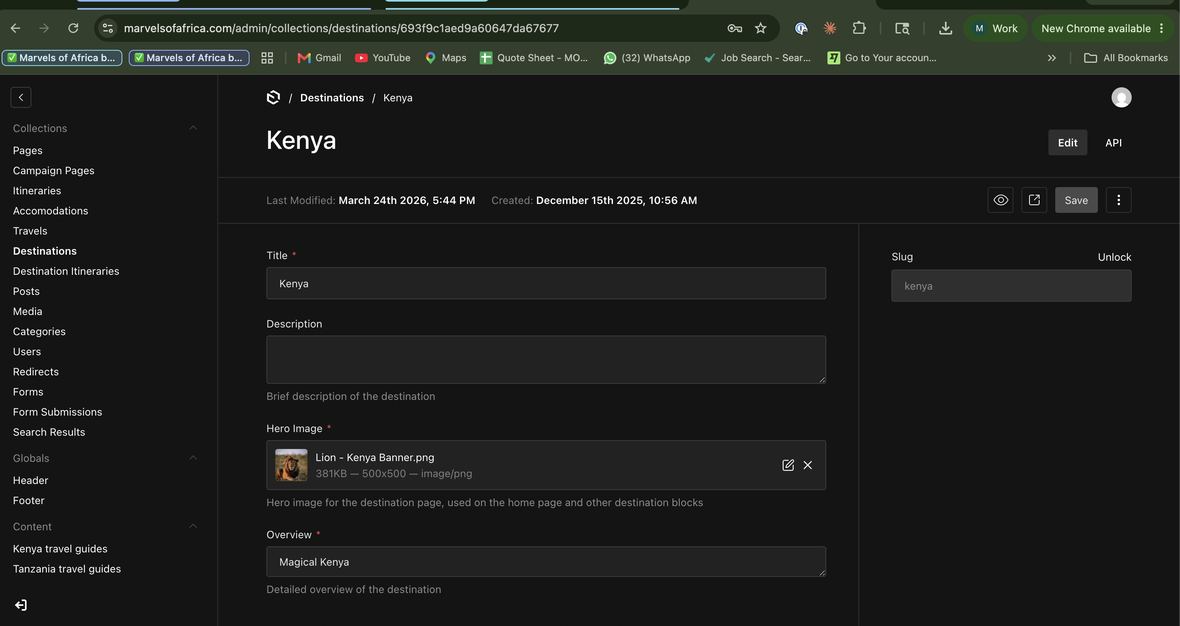
Itinerary CMS
A self-hosted headless CMS and marketing frontend for safari itineraries. Editors stack blocks into pages and multi-day trips, and the same content renders as a web page or a print-ready PDF.
- Block-based page builder. Every section is a Payload block wired to the frontend through one render map — new layouts without a deploy.
- Itinerary engine. Day-by-day timeline, camps and lodges, expected sightings, inclusions, gallery, reviews and FAQ.
- Luxury PDF export. A PDF-only render mode with its own cover and page-break rules — one content source, two very different outputs.
- Attributed enquiries. A shared form context records which page and which block opened every lead.
- Stack
- Next.js 15 App Router · TypeScript · Payload 3 · MongoDB · Tailwind + shadcn/ui
- Content
- Lexical rich text · nested docs · SEO, search and redirect plugins · S3 media · live preview
- Testing
- Vitest + Testing Library
Product 02 — multi-tenant SaaS
Safari Booking Management
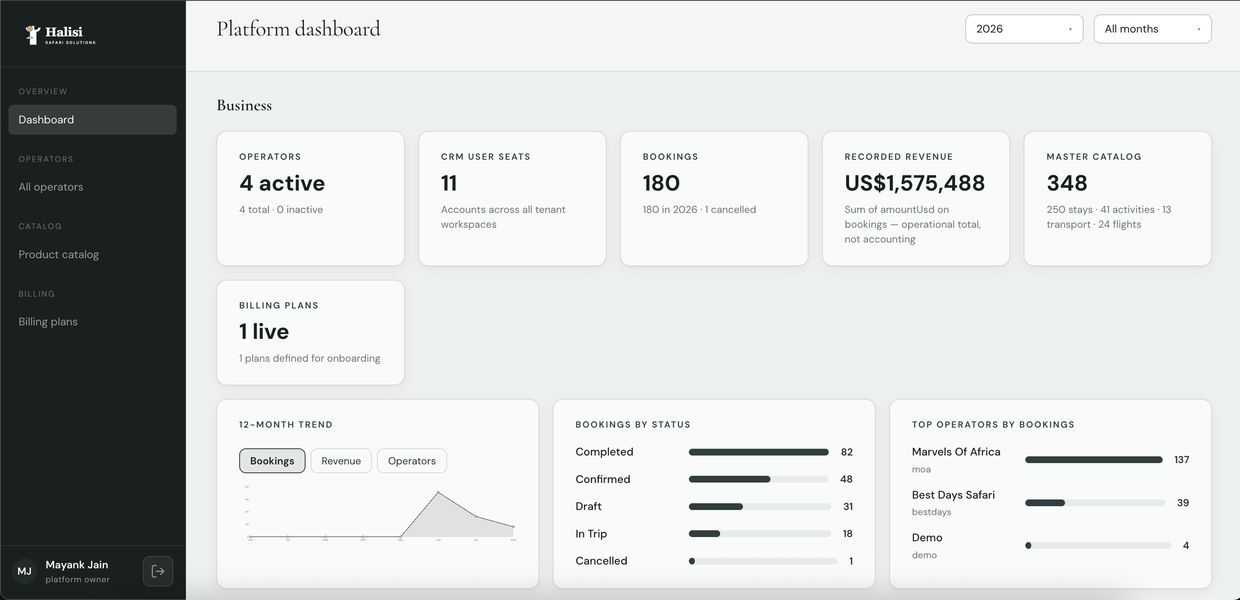
The operations platform underneath. Each operator signs in on their own subdomain with their own branding, users and roles; the Halisi console runs on the apex domain and onboards new tenants.
- Tenant isolation by subdomain. Middleware resolves host to tenant; every query, role and asset is scoped to it — one deployment serving the console and every operator.
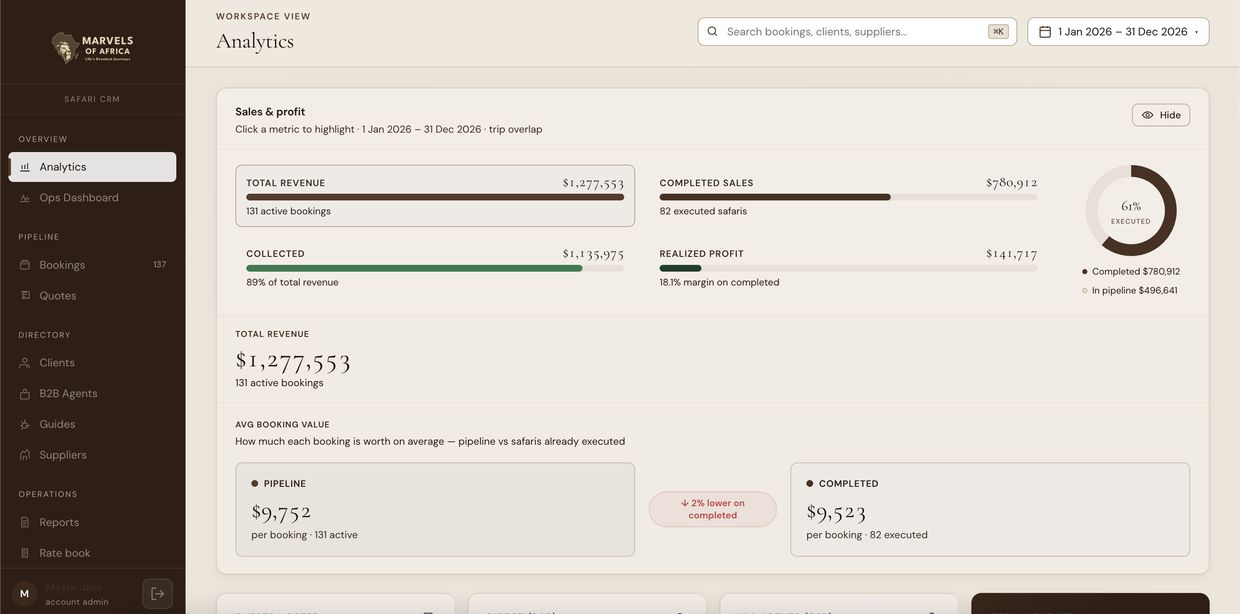
- Money, carefully. Bookings into verification, supplier ledger, credit notes and multi-currency instalments — cash-based P&L bucketed by payment date, not sold price.
- Operations views. Cashflow heatmap of inflow against unpaid supplier balance, a bookings calendar, and analytics that merge multi-country trips into one destination line.
- Auth for shared laptops. Session JWT plus a device cookie, email OTP on every new device, invite and set-password flows, per-tenant role validation.
- Stack
- Next.js 15 · React 19 · TypeScript · MongoDB / Mongoose · Zod
- Platform
- Multi-tenant subdomains on one Vercel project · Vercel Blob · Brevo transactional mail · jsPDF documents
- Scope
- Tenants, roles, bookings, quotes, rate book, group departures, guides, agents, supplier credit notes
Both repositories are private under the Halisi-safari-solutions organisation — happy to walk through the code in an interview.